Making a Smart Home System Installable Without Expert Knowledge

Organisation
Extrahut
Role
UX/UI Designer
Duration
1 Year
Tools & Technologies
Figma
Live Workshops
Problem
Installing and configuring Grenton's smart home system relied heavily on individual installer experience, and once a system was set up, day-to-day control wasn't intuitive enough for the homeowners actually living with it. Every extra minute spent on setup meant fewer installations the business could take on, and a confusing daily experience meant more support calls afterward.
My role
I worked as UX Designer on the project, running hands-on workshops with installers, support teams, and end users to map real workflows and uncover pain points. I had my own physical Grenton unit to test with, pairing hardware components with the software and walking through the control flow for each one myself before proposing changes.
Outcome
A simplified installation flow and a clearer day-to-day control interface, built around real workflows from installers and homeowners using Grenton hardware.
How i solved it
Research started in the field rather than at a desk, on-site observations of installers actually setting up systems, interviews with them and with the support team, and usability tests on the existing system to see exactly where people slowed down or made mistakes during setup and daily use.
To understand the problem from the inside, I worked from my own physical Grenton unit, pairing hardware components with the software and walking through the control flow for each one myself. That hands-on step surfaced friction that interviews alone wouldn't have caught, the gap between how a component was supposed to work and how it actually behaved once wired up.
From there I reworked the structure and flow of the system, focused especially on the complex configurations that gave installers the most trouble. I stayed closely involved with engineers and product managers throughout, checking that each proposed change was something that could actually ship, not just something that looked cleaner on screen.

What worked
Testing the hardware myself before proposing anything caught problems that interviews alone would have missed, the gap between how a component was supposed to behave and how it actually did once wired up. Staying close to engineering throughout meant the redesign stayed grounded in what could actually ship, not just what looked cleaner on screen.
What I'd Do Differently
Testing the hardware myself came later in the process, after the first round of interviews had already shaped some early assumptions. Starting with the physical unit before talking to installers would have meant walking into those conversations already knowing where the software and hardware disagreed, instead of discovering it in parallel.
// Other works
Have a look at my other work
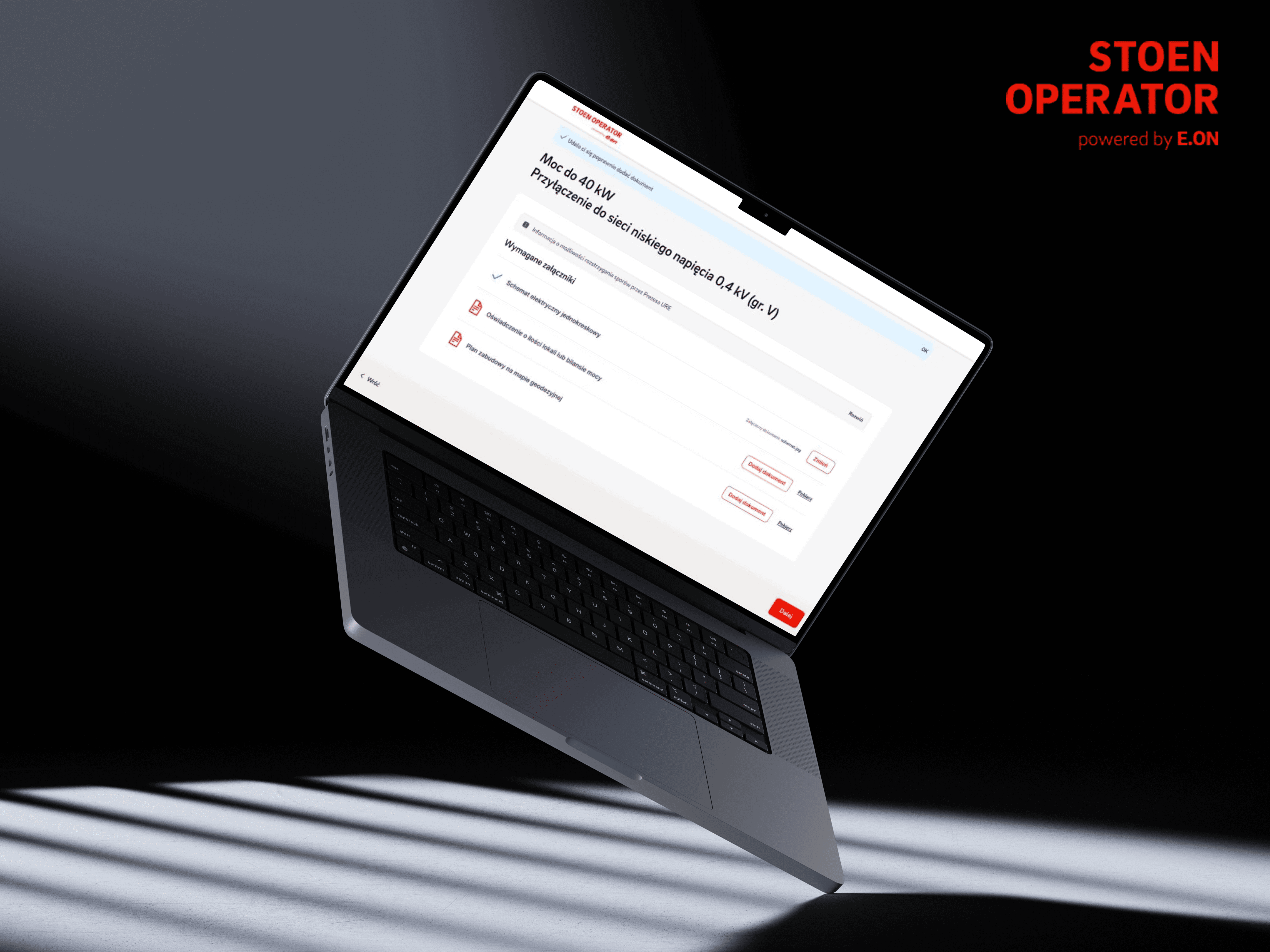
Merging Eight Application Paths Into One Flow
4 Months
2026
A grid connection portal where the site and the form lived like two disconnected places, and every case type had its own maze.

e-point
UX Designer

Redesigning and Rebranding TV Smart Across Web, Mobile, and TV
1 Year & 2 Months
2024 - 2025
A streaming platform on an outdated brand, with web, mobile, and TV that never quite felt like the same product.

PLEJ
Product Designer


@Michal Mendrek 2026